
⚡ Quick Answer
Fulfillment services and 3PL (third-party logistics) describe two different models: fulfillment is optimised for direct-to-consumer (DTC) e-commerce — individual orders, fast dispatch, platform integrations — while traditional 3PL handles bulk B2B freight, pallet and container shipments, and customs brokerage. Most growing e-commerce brands selling directly to consumers need fulfillment. Brands that also wholesale to distributors typically need both, ideally through a single integrated partner.
Fulfillment vs 3PL: Which Is the Right Choice for Your E-Commerce Brand?
As your e-commerce business grows beyond the 'ship it yourself' stage, you'll face a logistics decision that catches many founders off guard: should you use a fulfillment service or a third-party logistics provider (3PL)?
The terms are used interchangeably in the market — but they describe fundamentally different operating models. Choosing the wrong one for your stage and business type can be costly.
This guide breaks down what each model actually means, how they differ, and how to decide which is right for your brand.
What Is E-Commerce Fulfillment?
Fulfillment, in the e-commerce context, refers to an end-to-end service optimised specifically for direct-to-consumer (DTC) operations. It covers the complete journey from receiving your inventory to delivering individual orders to customers.
Key characteristics of fulfillment services:
• Built for individual consumer orders — not pallets or containers
• Fast turnaround — same-day and next-day dispatch as standard
• Direct integration with e-commerce platforms (Shopify, Shopee, Lazada, WooCommerce)
• Pick-and-pack at the SKU level with brand customisation capability
• Multi-carrier last-mile delivery with real-time tracking
• Returns management as an integrated function
Fulfillment centres are designed around e-commerce velocity — high order counts, low unit volumes, and B2C delivery expectations.
What Is a 3PL?
Third-party logistics (3PL) is a broader term covering any outsourced logistics function. It includes freight forwarding, warehousing, cross-border transport, customs brokerage, and last-mile delivery.
Traditional 3PLs were built for B2B operations — moving pallets and containers between businesses, not individual packages to consumers. Their infrastructure, pricing models, and service standards reflect this.
Key characteristics of traditional 3PL:
• Optimised for bulk shipments — pallets, containers, LTL/FTL freight
• Speed measured in days or weeks, not hours
• Pricing based on weight, volume, and container units
• Manual processes — often limited platform integration
• Strong for freight forwarding and customs clearance
• Less suited to individual order fulfilment at e-commerce velocity
Key Differences at a Glance
Order Size: Fulfillment → Individual consumer orders|3PL → Bulk shipments (pallets/containers)
Speed: Fulfillment → Same-day / next-day dispatch|3PL → Days to weeks
Technology: Fulfillment → Direct platform integration|3PL → Often manual, limited API
Pricing: Fulfillment → Per order, per SKU stored|3PL → Per pallet, per container
Best for: Fulfillment → DTC, multi-channel e-commerce|3PL → B2B freight, cross-border bulk
Brand customisation: Fulfillment → Yes — packaging, inserts, tape|3PL → Limited
When to Choose Fulfillment
Fulfillment is the right choice when:
• Your primary channel is DTC — selling directly to consumers through your own store or marketplaces
• You're shipping individual orders that need to be picked, packed, and dispatched quickly
• Brand experience matters — you want consistent, branded packaging at scale
• You need multi-channel inventory sync across Shopify, Shopee, Lazada, and other platforms
• You're shipping 100+ orders per month and growing
The threshold where professional fulfillment becomes more cost-effective than doing it in-house is typically around 300 orders per month. Below that, self-fulfilment may still be viable.
When to Choose 3PL
Traditional 3PL is the right choice when:
• You're primarily moving bulk shipments between businesses (B2B)
• You need freight forwarding — consolidating large volumes for sea or air freight
• You're importing goods from overseas and need customs brokerage
• Your shipping volumes are large enough to fill containers or trucks
• Speed is less critical than cost efficiency per unit
What About Both?
Many scaling e-commerce brands actually need both capabilities: DTC fulfilment for their consumer orders, and B2B freight/cross-border capability for importing goods and shipping to wholesale partners.
Running two separate logistics relationships — one fulfillment partner, one freight 3PL — creates fragmentation. Two invoices, two tracking systems, two operational relationships to manage.
The better solution is an integrated partner that handles both.
The ASTRO Model: Integrated Logistics for E-Commerce
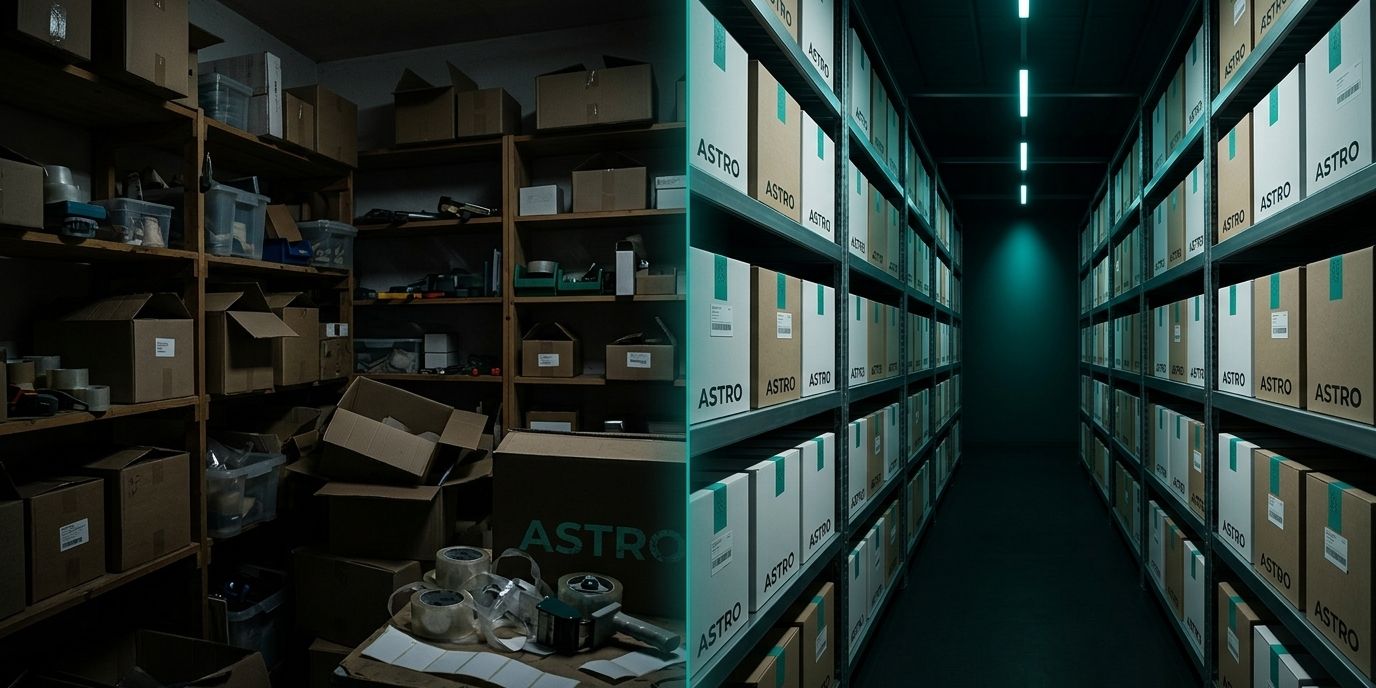
ASTRO sits at the intersection of both models. E-commerce fulfillment at DTC speed, plus B2B bulk shipping capability, cross-border freight consolidation, and customs clearance for Singapore-to-SEA routes.
One partner. One dashboard. One operational relationship that covers the full spectrum — from the inbound container arriving from your manufacturer to the individual order delivered to your customer's door.
This integration matters because your logistics challenges don't stay neatly in one category. As your brand grows, you'll need both. ASTRO is built for that.
Frequently Asked Questions
Q: What is the main difference between fulfillment and 3PL?
Fulfillment is designed for B2C e-commerce — it processes individual consumer orders fast, integrates with platforms like Shopify and Shopee, and offers branded packaging. Traditional 3PL is designed for B2B — it moves pallets and containers between businesses, manages freight forwarding, and handles customs brokerage. The core difference: fulfillment serves end consumers; 3PL serves other businesses.
Q: Which is cheaper — fulfillment or 3PL?
It depends on your order type. 3PL is cheaper per kilogram for bulk freight because it operates on volume economics. Fulfillment is more cost-effective for individual consumer orders because it's optimised for high-velocity picking and packing. Using a 3PL for DTC orders, or a fulfillment centre for pallet freight, will result in higher cost and worse service in both directions.
Q: Can I use both fulfillment and 3PL simultaneously?
Yes — many brands use fulfillment for their DTC channel and 3PL for wholesale distribution or bulk imports. The most efficient approach is an integrated partner that handles both under one system, eliminating the cost and complexity of managing two separate logistics providers.
Q: What is the minimum order volume to use a fulfillment centre in Singapore?
Minimums vary by provider. Some fulfillment centres accept brands from 50–100 orders/month; others require 300+. The more relevant threshold is economic: professional fulfillment typically becomes cost-competitive with self-fulfilment between 200–300 orders/month when total cost (labour, packaging, error rate, time) is properly accounted for.
Q: Does a fulfillment centre handle customs clearance for cross-border shipments?
Quality fulfillment centres in Singapore with cross-border capability handle customs documentation, duty calculation, and pre-clearance as part of their service. This is a key differentiator to check when evaluating providers — not all fulfillment centres have in-house customs expertise for SEA markets.
Q: What does 3PL stand for and what services does it include?
3PL stands for Third-Party Logistics. It's a broad term covering any outsourced logistics function, including freight forwarding, customs brokerage, warehousing, transportation management, and sometimes last-mile delivery. The services included vary significantly by provider — always clarify exactly what's covered.
Q: Is a fulfillment service the right choice for a brand just starting cross-border shipping?
For brands entering cross-border with DTC e-commerce (selling on Shopee, Lazada, or their own website), yes — fulfillment is typically the right starting point. The fulfillment centre's carrier network and customs infrastructure handles the cross-border complexity without requiring the brand to build those relationships from scratch.
→ Learn how ASTRO's integrated logistics model can support your brand